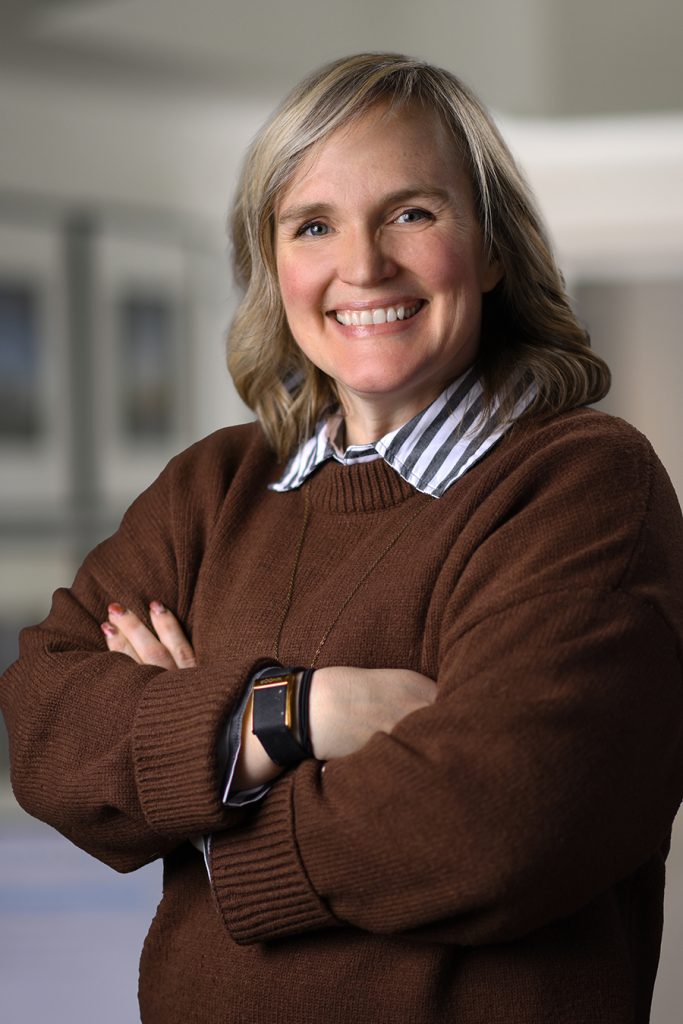
Meet Erica Torkelson, Director of Finance
March 31, 2026By: Ricky Austin
Dear Friends,
Last week, the Governor announced that Minnesota does not plan to opt into the new federal scholarship tax credit program (FSTC). The policy offers a federal tax credit of up to $1,700 for contributions to scholarship granting organizations. Because the program requires state participation, as it stands today, Minnesota students will not benefit from this additional source of scholarship support when it goes live in 2027.
(And just a reminder: donors in Minnesota can still participate—even if students in non–participating states are excluded from accessing funding.)
I’ve written about the program here and recently in the Catholic Spirit. Opting-in is a pretty straightforward win for kids, regardless of what schools they attend—public, charter, or private. So it is worth pausing on what this moment represents—and what it does not.
Ricky Austin is the president of the Aim Higher Foundation.
One thing it is: a clear sign we need to continue educating others on how this bill works and who will benefit—and you can trust that we will remain in dialogue with state leaders and coalition partners about its potential impact for Minnesota students.
One thing it is not: a time to give up.
Through the last 18 months, I’ve had the rare opportunity to engage with many of my peers: blue state leaders of Catholic school-focused scholarship granting organizations. Across different states and political environments, there is a shared understanding that the conversation we’re having about the FSTC ultimately isn’t about policy mechanics. It’s about people.
More specifically, it’s about families doing everything they can—often quietly—to create a better future for their children. Policy decisions shape what is possible, but they do not dictate the conviction of the families we serve or our responsibility to keep showing up for them.
When you spend time in schools, listening to students and parents, you are reminded very quickly of what is actually at stake.
In his recent monthly column, one of those peers, Mike Reardon of the Catholic Schools Foundation in Boston, reflected on something that closely mirrors what we see every day:
“ A common thing I hear from students during these conversations is that their parents encourage them to ‘not be like them. . .’
. . . The more I listen to these stories, the more I realize something important. The opposite is often true. These students should absolutely be like their parents.
In story after story, what is described is not failure but sacrifice. Stories of parents who work tirelessly, place their children's needs ahead of their own, and never lose sight of the transformational power of education. These parents worry their children will inherit their struggles and missed educational opportunities, but what their children truly inherit is something far more powerful: resilience, determination, and love.
This is the real message. It is not ‘don't be like me.’ It is learn from my example.’ Work hard and lead with love. ”
And that’s what stays with me in moments like this.
Policies will change. Programs will come and go. But the example set by parents across the Twin Cities—their sacrifice, their persistence, their belief in what education can make possible—does not.
It is important that we continue to examine every viable pathway—both with the FSTC and without—that could expand educational opportunities for families, especially those with the fewest options. Because the families we serve are not waiting on policy to do their part. They are already doing it.
Our responsibility is to meet them there.
In Service,